
Part 1: Plywood Grain Direction, Thickness, and Coastal Humidity Considerations
Why Cape Town’s Salt Air Demands Extra Care (And How to Avoid Sagging Shelves)
We recently installed floating kitchen cabinets in a Sea Point penthouse, only to find them sagging under the weight of imported marble within months. The issue? French cleats made from plywood with improper grain alignment—a rookie mistake in coastal zones. Here’s how to start right, balancing aesthetics and structural integrity for Cape Town’s unique conditions.
Tools & Materials for Part 1
- Plywood sheets (marine-grade recommended for coastal areas)
- Table saw with carbide-tipped blade
- Moisture meter (to test plywood hydration levels)
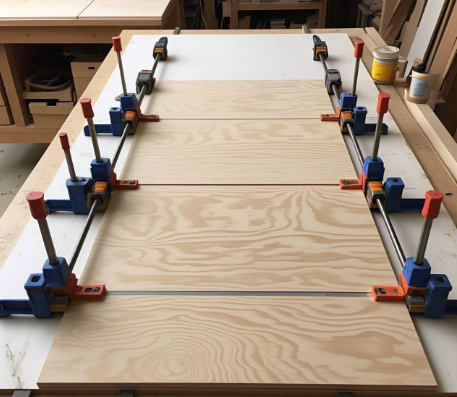
- Bar clamps (minimum 4x for glue-ups)
- Wood glue (waterproof, polyurethane-based)
Step 1: Plywood Grain Direction – The 45° Rule
French cleats rely on diagonal grain strength to handle shear forces. For Cape Town’s humidity-driven wood movement:
- Cut plywood at 45° to the face grain (see Diagram A).
- Avoid flat-sawn boards: They warp faster in coastal air.
- Check moisture content: Aim for 8–10% (use a moisture meter).

Localized Tip: In suburbs like Blouberg or Camps Bay, salt air accelerates warping. Store plywood indoors for 48 hours pre-cutting.
Step 2: Thickness vs. Weight Capacity
| Plywood Thickness | Max Load (kg/m) | Best For |
|---|---|---|
| 12mm | 25 | Light shelves (books, decor) |
| 18mm | 45 | Kitchen cabinets |
| 24mm | 70 | Heavy stone/marble countertops |
Cape Town Hack: Double-layer 12mm ply (glued cross-grain) outperforms 24mm in humid areas.
Step 3: Mitigating Coastal Humidity
- Seal edges: Use waterproof glue on all cuts to block salt moisture.
- Pre-drill screw holes: Prevents splitting during seasonal expansion.
- Avoid MDF: Swells irreversibly in Cape Town’s winter dampness.

Case Study: A client in Constantia used unsealed plywood—their cleats split within a year, dropping a R15k quartz slab.
Common Mistakes (Part 1)
- Mistake: Ignoring grain direction.
Fix: Mark grain lines with chalk before cutting. - Mistake: Using construction-grade ply.
Fix: Marine-grade resists delamination from humidity.
When to Call a Pro
If walls are uneven (common in Kalk Bay’s heritage cottages) or require concrete anchors, hire a structural construction specialist.
FAQ: Cape Town Edition
Q: Can I use hardwood instead of plywood?
A: Yes, but avoid oak—it reacts poorly to salt air. Stick to teak or meranti.
Q: How long should plywood acclimate indoors?
A: 48 hours minimum. In rainy Hout Bay, extend to 72 hours.
Next: Part 2: Shear Strength Calculations, Weight Limits, and Hidden Wall Anchors
CPT Builders
8 The Oval Pinelands
Cape Town
7405
021 012 5370