
Why Even the Sturdiest Plywood Fails Without Proper Physics (And How to Engineer Around It)
A client in Fresnaye learned this lesson the hard way: their custom teak cabinets, mounted on French cleats, tore free from the wall during a storm, shattering a R50k marble countertop. The cause? Undercalculated shear forces and corroded anchors. Cape Town’s coastal winds and weight demands require precision engineering. Here’s how to avoid costly disasters.
Tools & Materials for Part 2
- Digital calipers (for measuring anchor depths)
- Shear force calculator (free web tools available)
- Toggle bolts (for drywall) or wedge anchors (for brick)
- Torque wrench (calibrated to 12–15 Nm)
- Anti-corrosion spray (for coastal zones)
Step 1: Shear Strength Calculations – The 1.5x Safety Margin
French cleats fail when shear stress exceeds plywood’s lateral strength. Formula:
Shear Stress (τ) = Total Weight (kg) / Cleat Contact Area (cm²)
| Plywood Type | Shear Strength (N/mm²) | Max Load (kg/m) |
|---|---|---|
| Marine-Grade | 12.5 | 70 |
| Standard | 8.3 | 45 |
| MDF | 3.2 | 20 |
Example: A 2m cabinet holding 100kg needs:
Contact Area = (100kg * 9.81m/s²) / (12.5N/mm² * 1.5 safety margin) = 523cm²
➔ Cleat width = 523cm² / 200cm length = 2.6cm (use 3cm-wide cleats)
Cape Town Tip: Add 20% capacity for wind-induced vibrations in high-rises.
Step 2: Hidden Wall Anchors – Brick vs. Drywall
For Brick Walls (Common in Old Sea Point Homes):
- Drill pilot holes: 2mm wider than anchor diameter.
- Use wedge anchors: Embed 75mm deep (minimum).
- Torque to 15 Nm: Over-tightening cracks mortar.
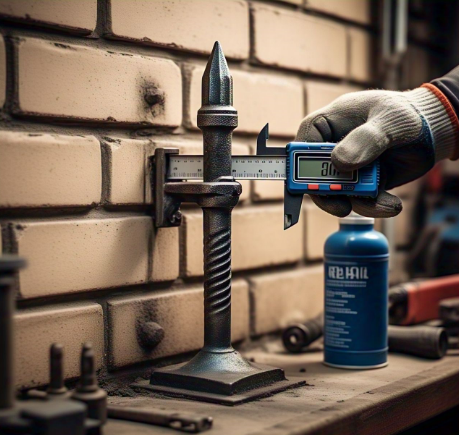
For Drywall (Modern CBD Apartments):
- Toggle bolts: Require 50mm clearance behind walls.
- Locate studs: Use a stud finder—spacing often mismatched in Cape Town builds.
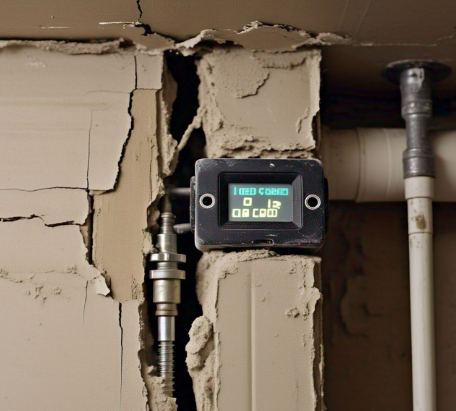
Case Study: A Bantry Bay penthouse used drywall anchors in brick—R30k in repairs later.
Step 3: Anti-Corrosion for Coastal Air
Salt air corrodes metal anchors in 18–24 months. Mitigate with:
- Stainless steel anchors: Grade 316 (not 304).
- Zinc spray coatings: Reapply annually.
- Silicone seals: Around anchor heads to block moisture.
Pro Tip: In Kalk Bay, replace anchors every 5 years—no exceptions.
Common Mistakes (Part 2)
- Mistake: Ignoring dynamic loads (slamming doors, wind).
Fix: Multiply static weight by 1.3 for coastal zones. - Mistake: Mixing anchor types (e.g., toggle + wedge).
Fix: Uniform anchors distribute stress evenly.
When to Call a Pro
If walls are double-brick (common in Newlands) or have asbestos insulation (old Woodstock lofts), hire a structural engineer.
FAQ: Cape Town Edition
Q: Can I reuse anchors from old shelves?
A: Never—salt corrosion weakens metal. Always install fresh.
Q: How to secure cleats to plaster-and-lath walls?
A: Use hollow-wall anchors with 50mm reach, and spread load across 3+ studs.
- Previous: Part 1: Plywood Grain Direction, Thickness, and Coastal Humidity
CPT Builders
8 The Oval Pinelands
Cape Town
7405
021 012 5370